
Home/Work/AI ad creative editor
AI ad creative editor
A browser canvas editor for advertising creative with an AI editing pipeline underneath — background removal, layer extraction from flat artwork, mask brushing, batch variant generation and A/B comparison, then export at every ad size.
The situation
Advertising creative is repetitive work: the same product, rendered again and again across dozens of placements and sizes. Marketing teams either send every variation back to a designer or settle for generic templates. The brief was an editor a marketer could drive themselves, with the tedious image work handled by models rather than by hand.
What we built
- An editor shell with a full tool system — select, draw, shapes and text — plus undo and redo, snapping and zoom
- A layers panel and a context-sensitive properties panel that changes with the selection
- A text tool with real typography controls: family, size, weight, alignment, letter-spacing and line-height
- Mask brushing and overlay tools for compositing
- An AI editing pipeline — background removal, layer extraction from flat artwork, and inpainting — returning results as ordinary editable layers
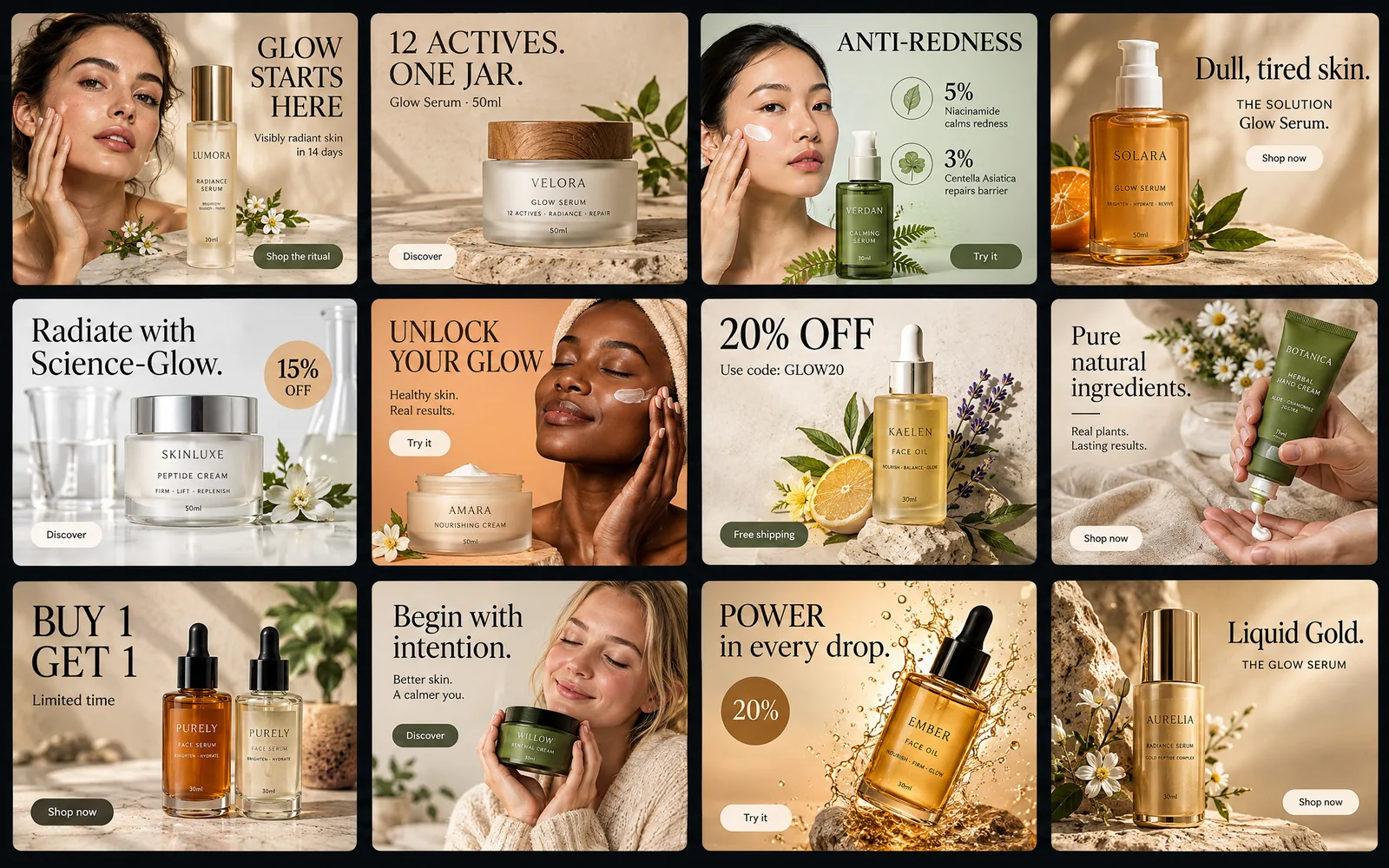
- A batch grid for generating many variants at once, with A/B comparison between them
- Filters, effects and an export dialog covering every required ad size
Engineering notes
The difficult part was putting the AI pipeline inside a normal editor rather than beside it. A background removal cannot return a flattened image — it has to come back as an editable layer carrying its own mask, so the user can keep working on it like anything else they drew. Several background-removal and segmentation models were compared on real product photography before one was chosen, because the quality difference on fine edges — hair, glassware, packaging — was large enough to decide the architecture.
Tell me what your customers should be able to design.
If your process today is an email, a sketch, and somebody rebuilding it by hand afterwards — that's the problem I work on.
or email [email protected]