
Home/Services/Web-to-print & design tools
Web-to-print and online design tool development
The point where an off-the-shelf drag-and-drop widget stops being enough, and the editor itself becomes the product.
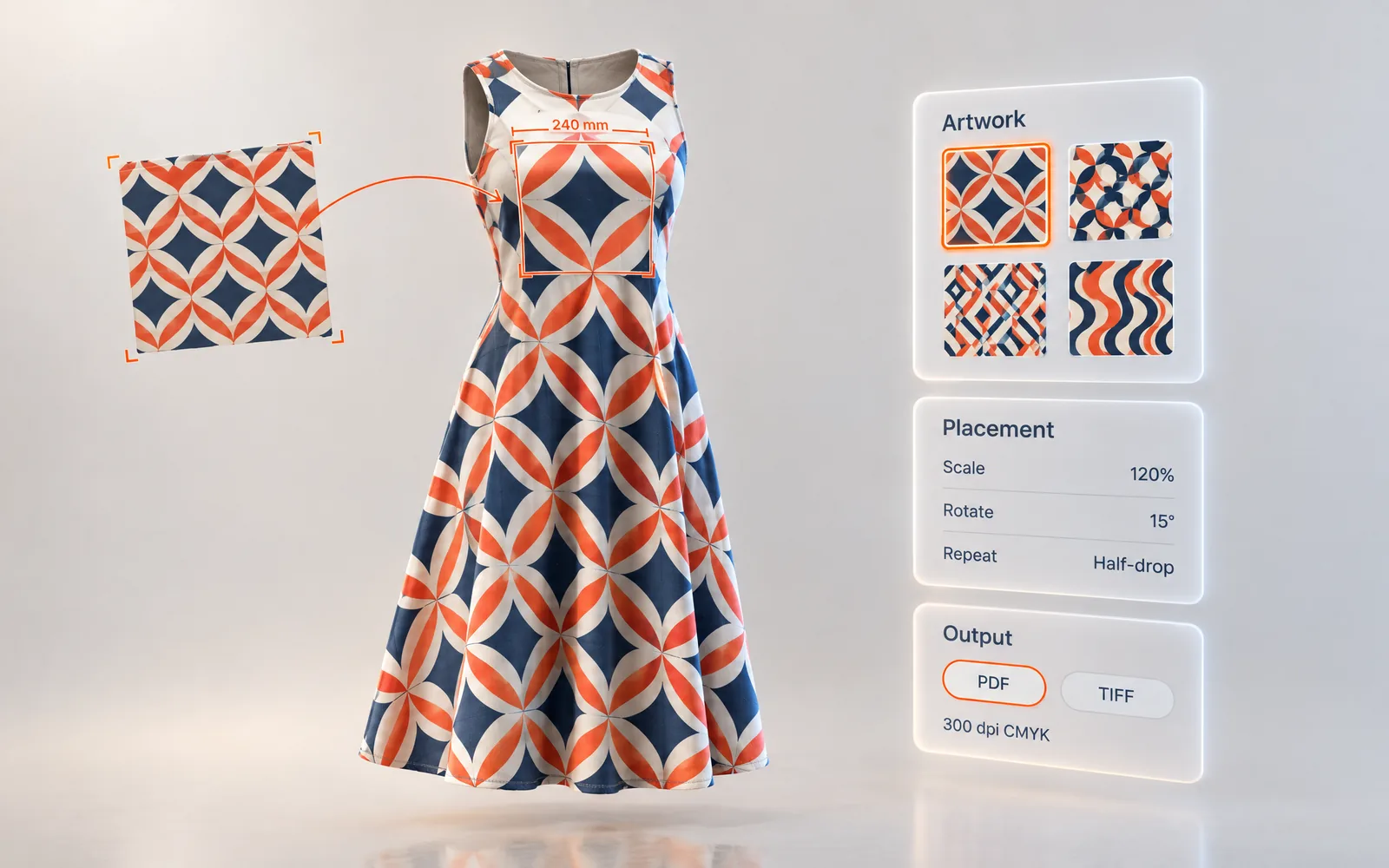
When you need a real editor, not a widget
Web-to-print platforms live or die on their editor. If a customer cannot lay out what they want in under a minute, they leave; if what they lay out cannot be printed, you lose money on the job. Both problems are engineering problems.
- Layers, groups and z-order that behave the way people expect from desktop software
- Snapping and alignment against guides, bleed, safe areas and other objects
- Undo and redo as a proper command history rather than periodic snapshots
- Templates and variable data, so one design produces a thousand personalised items
- Keyboard shortcuts, because anyone using a tool daily stops reaching for the mouse
- Real-time collaboration over WebSockets when more than one person works on a document
- Print-ready output — correct bleed, colour handling, fonts converted to outlines
Performance is a feature
Editors die from slowness. A canvas holding a few thousand objects will crawl unless hit-testing, rendering and state updates are designed for it from the start — spatial indexing, dirty-rectangle redraws, off-screen canvases, and keeping the framework out of the render loop. Retrofitting that usually means rewriting the core, which is why it is designed in rather than optimised in.
What you get
- A browser editor built around your actual workflow, not a generic canvas
- A document format you own and can version
- Output in the formats your production actually runs
- Performance tested with realistic document sizes, not toy examples
- The full source, handed over at the end
Common questions
What is web-to-print?
Software that lets a customer design or personalise a printed product in the browser and order it directly, with the design arriving at production in a form that can be run without a designer touching it. It covers everything from business cards and apparel to signage and packaging.
Why not use an existing editor library?
Where a library fits, we use one — Fabric.js and Paper.js both earn their place. The custom work starts when the interaction model, the document format or the performance requirement goes beyond what a general-purpose library was designed for.
Can several people edit at once?
Yes. Real-time collaboration over WebSockets, with conflict handling appropriate to the document type. It adds meaningful cost, so it is worth deciding early whether you need it.
Can it produce print-ready files?
Yes — PDF with correct bleed and colour handling, or whatever your press and finishing equipment expect. Output is specified against your production process rather than assumed.
Tell me what your customers should be able to design.
If your process today is an email, a sketch, and somebody rebuilding it by hand afterwards — that's the problem I work on.
or email [email protected]